
How Fashion, Social Media, and Authenticity Shape Career Success
Author: Jamie Yoo
When we think about career success, we usually picture degrees hanging on the wall, years of experience, a strong professional network, and maybe a LinkedIn profile that's finally updated. We celebrate leadership, communication, and expertise—but there's one part of professional success that doesn't get nearly enough attention: how we choose to present ourselves.
Can fashion really influence the way people perceive our confidence, credibility, and leadership potential?
Before we dive in, this conversation is for everyone. Women, men, nonbinary individuals, gender-nonconforming people, and anyone whose identity or personal style doesn't fit neatly into a box. Fashion has never belonged to one gender, and confidence certainly doesn't have a dress code.
For decades, professional success was tied to a fairly predictable image. Think tailored suits, neutral colors, polished shoes, and just enough navy blue to stock an entire executive floor. Somewhere along the way, many of us were taught that looking successful meant looking like everyone else.
But today's workplace tells a different story.
As younger generations enter the workforce and social media continues to reshape professional communication, authenticity is becoming just as valuable as expertise. Employers still expect professionalism, but they're also looking for people who communicate with confidence, demonstrate emotional intelligence, and bring genuine perspectives to the table. Increasingly, the professionals who stand out aren't those who fit a mold—they're the ones who know who they are.
I think that's one of the most exciting shifts happening in today's workplace. Success isn't becoming less professional—it's becoming more personal.
Fashion Is More Than Clothing—It's Communication
Every outfit tells a story.
Before we shake someone's hand, introduce ourselves in a meeting, or say hello on a Zoom call, people have already started forming impressions. It isn't always fair, but it's human nature. Our appearance becomes one of many signals people use to understand who we are.
Sometimes our style communicates confidence. Other times it reflects creativity, professionalism, or approachability. And sometimes it quietly says, "Apparently adulthood requires owning several blazers in nearly identical shades."
Long before Instagram feeds and LinkedIn headshots existed, sociologist Erving Goffman introduced the concept of impression management—the idea that we continuously communicate aspects of our identity through our appearance and behavior. His work reminds us that first impressions aren't shaped only by what we say, but also by how we choose to present ourselves.1
Research has continued to support that idea. Studies suggest our clothing can influence how others perceive our professionalism and credibility. While the perfect outfit won't replace experience or guarantee success, it can reinforce the confidence and competence we already bring into the room.2
Fashion doesn't create our abilities.
It simply helps communicate them.
And in today's world, communication extends far beyond what happens in person.
Social Media Changed the First Impression
Not long ago, first impressions happened in conference rooms, networking events, interviews, or over coffee with a future colleague.
Today, they often happen before we ever meet.
A LinkedIn profile, Instagram account, personal website, TikTok video, or even a Google search frequently becomes our first introduction. Employers, recruiters, clients, collaborators, and even classmates often meet the online version of us before they meet us in person.
That's one of the biggest ways social media has transformed the workplace.
It hasn't replaced first impressions—it has expanded them.
Our personal brand is no longer built solely through face-to-face interactions. It's shaped by the content we create, the conversations we join, the causes we support, the photos we share, and even how we interact with others online. Together, those moments begin telling a story about who we are and what we value.
For me, that's where fashion and social media naturally intersect.
Fashion gives us one way to express our identity, while social media allows us to share that identity with a broader audience. Neither tells our whole story on its own, but together they help create a more complete picture of who we are—professionally and personally.
As someone pursuing a master's degree in Branding and Marketing Communications while creating content centered around fashion, beauty, lifestyle, and storytelling, I've learned that authenticity resonates far more than perfection.
My goal has never been to fit into someone else's definition of success.
Instead, I've focused on showing up consistently, creating content that reflects my values, and encouraging others to feel confident doing the same.
Of course...
That's been easier said than done.
Finding the Balance Between Authenticity and Professionalism
Like many people, I've had moments where I questioned whether my personal style would be seen as "too much" in a professional setting. Would the bold lipstick distract from my ideas? Would a colorful blazer make me seem less credible? Could I love fashion and still be viewed as a strategic communications professional?
If you've ever stood in front of your closet wondering whether to play it safe or wear the outfit that feels the most like you, you're not alone.
One of the biggest contradictions we face is that we're encouraged to "be ourselves," but often only if that version of ourselves fits comfortably within someone else's expectations. It's an unspoken balancing act between authenticity and conformity, and navigating it isn't always easy.
Over time, I've realized that professionalism and authenticity don't have to compete—they can complement one another. Confidence isn't something we magically put on with an outfit; it's something we build by consistently showing up as ourselves. Author Amy Cuddy describes presence as the alignment between confidence and authenticity, and that idea has stayed with me. When our appearance reflects who we genuinely are, it often becomes easier to communicate with confidence, clarity, and purpose.3
That doesn't mean every workplace has the same expectations. Reading the room, understanding organizational culture, and exercising emotional intelligence will always matter. Authenticity isn't about ignoring professional norms—it's about finding ways to express yourself within them.
Why This Matters for Organizations
This conversation extends far beyond individual wardrobes. It has real implications for organizations and the way they communicate with employees, customers, and stakeholders.
Throughout my professional experience in training, communications, and content creation, I've watched social media transform employees into ambassadors for the organizations they represent. Whether someone is sharing a company achievement on LinkedIn, appearing in a behind-the-scenes video, responding to customers online, or creating content that highlights company culture, they contribute to the organization's reputation.
In many ways, today's audiences aren't just evaluating products or services—they're evaluating people. They want to understand a company's culture. They want transparency, authenticity, and values they can connect with. Social media has made that possible by giving organizations an opportunity to communicate through real human experiences instead of relying solely on traditional marketing messages.
I've also noticed that organizations embracing employee advocacy and authentic storytelling often create stronger engagement because audiences trust people more than perfectly polished advertisements. When employees feel empowered to represent both themselves and their organization professionally, everyone benefits. Individuals strengthen their personal brands while organizations build credibility, trust, and lasting relationships with their communities.
To me, that's one of social media's greatest strengths in today's business environment. It has transformed communication from a one-way message into an ongoing conversation.
So...Does Fashion Have a Place in Career Success?
I believe it does—but perhaps not for the reasons we once thought.
Fashion isn't about proving intelligence, wearing designer labels, or fitting into someone else's definition of professionalism. Instead, it's one of the many ways we communicate who we are before we ever speak. Just as our words, actions, and digital presence shape our personal brand, our style can reinforce qualities like confidence, creativity, professionalism, and authenticity.
Of course, clothing alone won't earn you the job, secure the promotion, or establish your credibility. Your knowledge, character, work ethic, and leadership will always matter most. However, when your outward appearance aligns with your values and the way you carry yourself, it becomes another tool for communicating your personal brand with intention.
I also believe our understanding of professionalism is continuing to evolve. Success no longer belongs to one gender, one body type, one aesthetic, or one generation. Today's workplaces are becoming more diverse, more inclusive, and more accepting of individuals who bring their authentic perspectives and personalities to the table. While every organization has its own culture and expectations, authenticity and professionalism no longer have to exist at opposite ends of the spectrum.
Social media has only accelerated this shift. Every profile, post, video, and interaction contributes to the story we tell about ourselves. Our digital presence has become an extension of our professional identity, giving us opportunities to build trust, demonstrate expertise, and connect with others long before we ever meet in person.
Maybe being fashionably successful isn't about dressing for the job you want anymore. Maybe it's about dressing like the person you've worked so hard to become.
When your personal style, your online presence, and your values align, you create a personal brand that feels authentic, memorable, and uniquely your own.
Because at the end of the day, people rarely remember every detail of what you wore. They remember how you made them feel, the confidence you carried, and the authenticity you brought into the room.
To me, that's what being fashionably successful is really about.
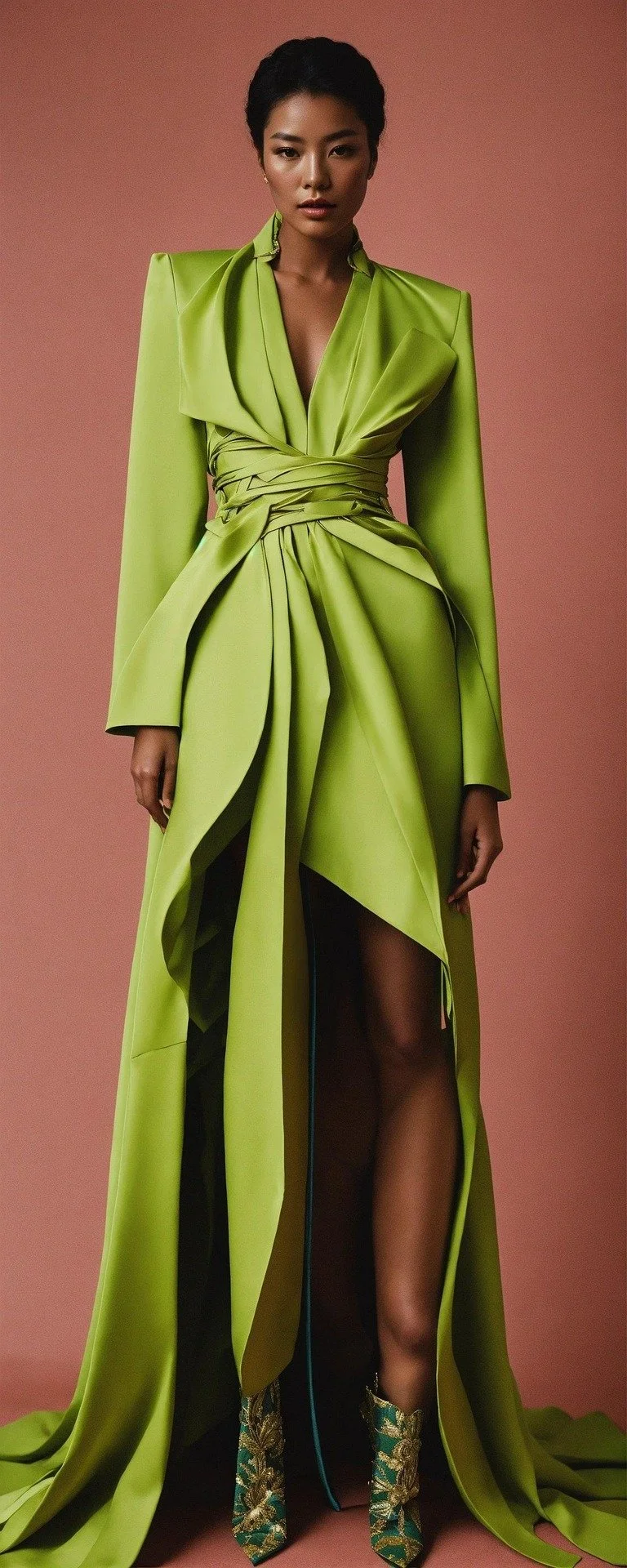
Sources & Further Reading
Curious to learn more? These books and research studies inspired many of the ideas explored in this article and offer deeper insights into personal branding, first impressions, leadership, and authentic communication.
The Presentation of Self in Everyday Life
Erving Goffman
A foundational exploration of impression management, explaining how people consciously and unconsciously communicate identity through appearance and behavior.
Unbuttoned: The Interaction Between Provocativeness of Female Work Attire and Occupational Status
Howlett, N., Pine, K. J., Cahill, N., Orakçıoğlu, I., & Fletcher, B. C. (2013)
Published in Sex Roles, this study examines how workplace attire influences perceptions of professionalism, credibility, and occupational status.
Presence: Bringing Your Boldest Self to Your Biggest Challenges
Amy Cuddy
Explores how confidence, authenticity, and presence influence communication, leadership, and professional success.
AI tools were used in the structuring of this post.
